Facts about - Rice, Potato & Carbohydrates
The Better Option:
Good vs. Bad Carbohydrates
Carbohydrates are an important part of your diet, but let
us see the difference between good and bad carbohydrates.




The Better Option:
Cook Your
Rice With Coconut Oil
White rice is a good source of carbohydrate – in limited
quantities and at the right time of day. Also we know that coconut oil provides useful energy, but what about the
two together?
New research on what happens when you cook rice
with coconut oil is very promising & mind blowing !
Turning brown rice into white rice removes phytate
– an anti-nutrient that stops us from absorbing minerals – and leaves both a
clean source of starch and an excellent base for several meals. It
reduces arsenic – brown rice was found to have up to 80 times more arsenic than
white rice. White rice is the perfect vehicle for all kinds of tasty things:
bacon, grass-fed butter etc.
Too much rice too often is no good, the body
converts white rice to glucose quickly, which is why too much of it, like too
much of any carbohydrate, can trigger insulin resistance, fatigue, weight gain,
and a host of other issues.
But what if you could decrease its glycemic index,
increase its health benefits, and make it more safe, all with a simple change
to the way you cook it? All it takes is
a little coconut oil.
Upgrading Rice With Coconut Oil
Coconut oil serves an important role in the
diet by boosting your brain and metabolism, it is an excellent source of cheap
and abundant lauric acid, and it’s a beneficial addition to any diet.
According to The American Chemical Society, coconut
oil may also be the key to upgrading your rice.The researchers steamed rice
normally, making just two minor changes: they added coconut oil before cooking
the rice, and afterward they cooled the rice down in a fridge. Researchers
already knew that cooked-and cooled or parboiled rice were higher in resistant
starch than freshly-steamed rice.
The results were great, the calories in the rice
decreased by 10-12%, and with more research, they can raise that number to 60%.
So it’s good to be able to eat a lot more rice
without overloading on carbs!
When coconut oil and rice are cooked together, the
oil binds to the digestible starch in the rice – that’s the starch that
converts to glucose. Once bound with the oil, the digestible starch begins to
crystallize, creating another form of starch: the resistant variety. The researchers found that cooling the rice after cooking it
promoted crystallization, leading to a shocking 10 to 15-fold increase in
resistant starch compared to normally prepared white rice.
Importance of Resistant Starch
Resistant starch can be helpful for some people,
although loading up on potato starch and the like isn’t a great strategy for
many of us. Taken as a supplement, it can improve insulin sensitivity, enhance sleep
quality, increase energy levels, and promote mental clarity.
When it comes resistant starch in rice, there is
another benefit. Our bodies convert digestible starch into glucose, which
raises blood sugar levels. Humans don’t digest resistant starch, on the other
hand, so it doesn’t raise blood glucose at all. In fact, for some people,
certain types of resistant starch can lower glucose and insulin levels after
meals
The benefit of cooking rice with coconut oil,
therefore, is twofold:
·
The rice produces
a smaller spike in blood sugar because you get more resistant starch to take
the place of digestible starch.
·
Moreover,
the inherent qualities of the resistant starch decrease this smaller spike even
further.
The result is lower-carb rice.
With a significantly lower glycemic index, rice no
longer has to be limited to an occasional treat.
Enjoy this quick dessert recipe..
RECIPE: Low Carb Rice
It’s appropriate for days when
you are going to dip out of ketosis, but it won’t spike your blood sugar the
way junk food or sugar would
Ingredients:
·
1
cup organic sushi rice
·
1
½ cups water
·
Pinch
of Himalayan pink salt
·
2
tbsp. grass-fed butter
·
1
tsp. raw honey
·
3
tbsp. coconut oil
Steps:
1) Bring water to a boil.
2) Rinse rice well in cold water and drain.
2) Add rice and coconut oil, reduce heat to
low, cover, and cook for 20 minutes.
3) Remove rice from heat and immediately transfer
it to the fridge. Let rice cool in the fridge for 1 hour, or longer. You can
portion out the rice before putting it in the fridge so that it cools more
quickly.
4) When rice is cool, set oven to warm.
5) Remove rice from fridge and put in oven until
warm.
7) Enjoy.
=======================================================
Good vs. Bad Carbohydrates
Carbohydrates are an important part of your diet, but let
us see the difference between good and bad carbohydrates.
Don't Miss This
Carbohydrates are
an important part of a healthy diet, but there are global discussions about the
good and bad carbohydrates.
So how do you know which is which? The answer is both simple
— and complex.
Good vs. Bad
Carbohydrates
Carbohydrates, often referred to as “carbs,” are your body's
primary energy source, and they're a crucial part of any healthy
diet. Carbs should never be avoided, but it is important to
understand that not all carbs are alike.
Carbohydrates can be either simple (nicknamed
"bad") or complex (nicknamed "good") based on their
chemical makeup and what your body does with them.
Complex carbohydrates, like whole grains and legumes,
contain longer chains of sugar molecules; these usually take more time for the
body to break down and use.
Simple
Carbohydrates
Simple carbohydrates are composed of simple-to-digest, basic
sugars with little real value for your body. The higher in sugar and lower in fiber, the worse
the carbohydrate is for you — remember those leading indicators when trying to
figure out if a carbohydrate is good or bad.
Fruits and vegetables are actually simple carbohydrates —
still composed of basic sugars, although they are drastically different from
other foods in the category, like cookies and cakes. The fiber in fruits and
vegetables changes the way that the body processes their sugars and slows down
their digestion, making them a bit more like complex carbohydrates.
Simple carbohydrates to limit in your diet include:
Soda
Candy
Artificial syrups
Sugar
White rice, white bread, and white pasta
Potatoes (which are technically a complex carb, but act more
like simple carbs in the body)
Pastries and desserts
You can enjoy simple carbohydrates on occasion, you just
don't want them to be your primary sources of carbs. And within the simple carb
category, there are better choices — a baked potato, white rice, and regular
pasta — than others — chips, cakes, pies, and cookies.
Complex
Carbohydrates
Complex carbohydrates are considered "good"
because of the longer series of sugars that make them up and take the body more
time to break down. They generally have a lower glycemic load, which means that
you will get lower amounts of sugars released at a more consistent rate —
instead of peaks and valleys —to keep you going throughout the day.
Picking complex carbohydrates over simple carbohydrates is a
matter of making some simple substitutions when it comes to your meals.
"Have brown rice instead of white rice, have whole-wheat pasta instead of
plain white pasta"
To know if a packaged food is made of simple or complex
carbohydrates, look at the label. "Read the box so you know what exactly
you're getting. If the first ingredient is whole-wheat flour or whole-oat
flower, it's likely going to be a complex carbohydrate, "And if there's
fiber there, it's probably more complex in nature."
Glycemic Load
Factor
Describing carbs as being either simple or complex is one
way to classify them, but nutritionists and dietitians now use another concept
to guide people in making decisions about the carbs they choose to eat.
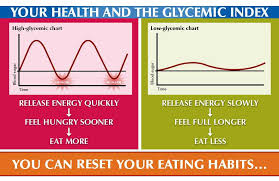
The glycemic
index of a food basically tells you how quickly and how
high your blood sugar will rise after eating the carbohydrate contained in that
food, as compared to eating pure sugar. Lower glycemic index foods are
healthier for your body, and you will tend to feel full longer after eating
them. Most, but not all, complex carbs fall into the low glycemic index
category.
It is easy to find lists of food classified by their glycemic index.
You can see the difference between the glycemic index of some simple and
complex carbohydrates in these examples:
White rice, 64
Brown rice, 55
White spaghetti, 44
Whole wheat spaghetti, 37
Corn flakes, 81
100 percent bran (whole grain) cereal, 38
Look at the glycemic load of
a food - the glycemic load takes into account not only its glycemic index, but
also the amount of carbohydrate in the food. A food can contain carbs that have
a high glycemic index, but if there is only a tiny amount of that carb in the
food, it won’t really have much of an impact. An example of a food with a high
glycemic index but a low glycemic load is watermelon, which of course tastes
sweet, but is mostly water.
Skip low-nutrient dessert, consider the levels of sugar and
fiber in carbs, and focus on healthy whole grains, fruits, and veggies to get
the energy your body needs every day.
THE GLYCEMIC INDEX
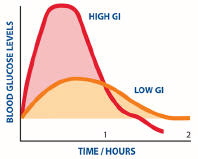
The glycemic index (GI) is a ranking of carbohydrates on a scale
from 0 to 100 according to the extent to which they raise blood sugar levels
after eating. Foods with a high GI are those which are rapidly digested and
absorbed and result in marked fluctuations in blood sugar levels. Low-GI foods,
by virtue of their slow digestion and absorption, produce gradual rises in
blood sugar and insulin levels, and have proven benefits for health. Low GI
diets have been shown to improve both glucose and lipid levels in people with
diabetes (type 1 and type 2). They have benefits for weight control because
they help control appetite and delay hunger. Low GI diets also reduce insulin
levels and insulin resistance.
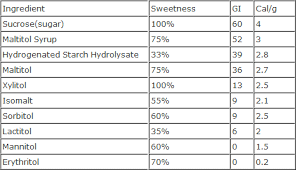
Use sugar with care - The various sugars and their glycemic index :-
Measuring the GI
To determine the GI
value of foods, measured portions of the food containing 50 grams of available
carbohydrate (or 25 grams of available carbohydrate for foods that contain
lower amounts of carbohydrate) are fed to 10 healthy people after an overnight
fast. Finger-prick blood samples are taken at 15-30 minute intervals over the
next two hours. These blood samples are used to construct a blood sugar
response curve for the two hour period. The incremental area under the curve
(iAUC) is calculated to reflect the total rise in blood glucose levels after
eating the test food. The GI value is calculated by dividing the iAUC for the
test food by the iAUC for the reference food (same amount of glucose) and
multiplying by 100 (see Figure 1). The use of a standard food is essential for
reducing the confounding influence of differences in the physical
characteristics of the subjects. The average of the GI ratings from all ten
subjects is published as the GI for that food.
The GI of foods has
important implications for the food industry. Terms such as complex
carbohydrates and sugars, which commonly appear on food labels, are now
recognised as having little nutritional or physiological significance. The
WHO/FAO recommend that these terms be removed and replaced with the total
carbohydrate content of the food and its GI value. However, the GI rating of a
food must be tested physiologically and only a few centres around the world
currently provide a legitimate testing service

